Screw piles vs concrete foundations is one of the first decisions homeowners and builders face when planning a deck, garage, addition, or new structure in Calgary. Both are legitimate foundation methods used across the city, but they perform very differently once Calgary’s clay soil, frost line, and freeze-thaw cycles get involved. This article compares the two directly so you can understand which one fits your project, and why the “better” choice often depends on more than just upfront cost.
If you haven’t already, it’s worth reading our guide to how screw pile foundations work and why screw piles need proper engineering design before diving into this comparison.
How Each Foundation Type Works
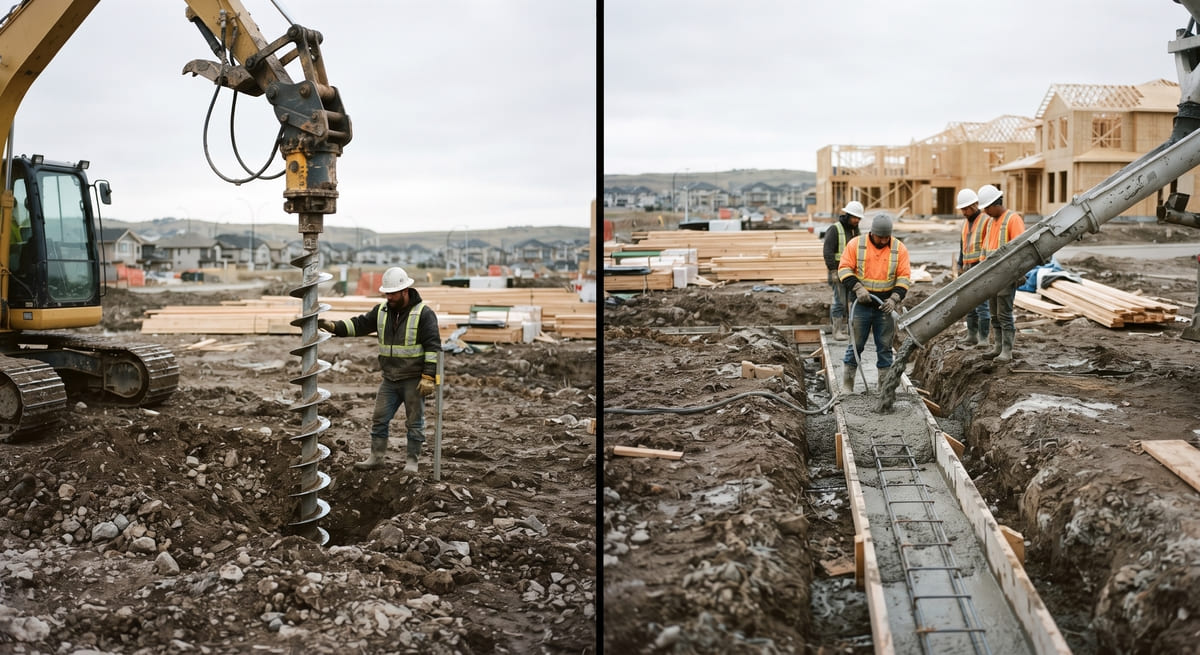
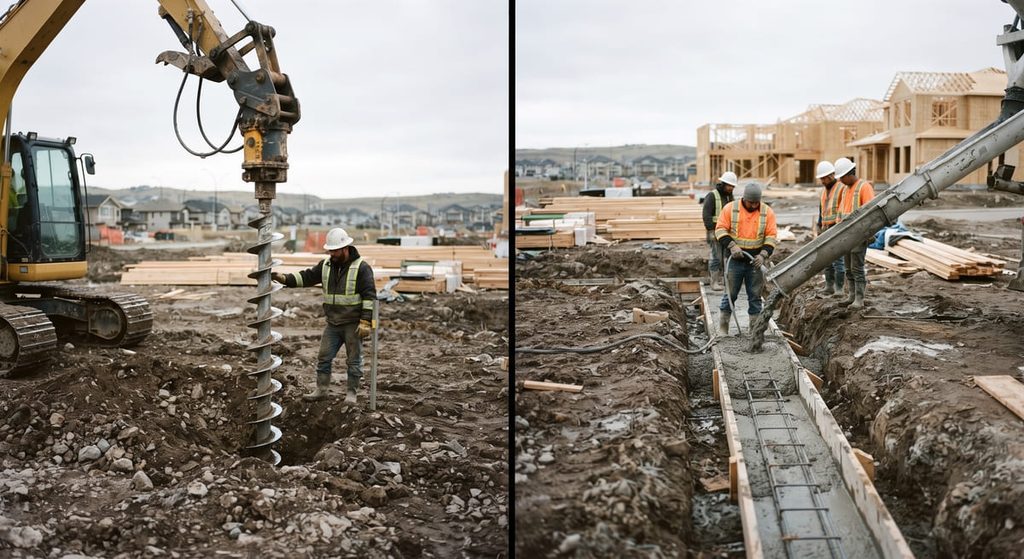
Concrete foundations rely on poured or precast concrete, either as strip footings, slabs, or sonotube piers, that transfer the structure’s load into the ground through mass and bearing surface. Concrete is strong in compression, meaning it resists being crushed, but weak in tension, meaning it resists bending or stretching poorly.
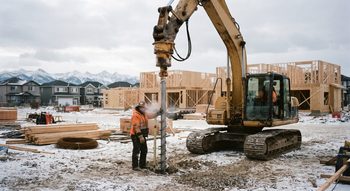
Screw piles are steel shafts with helical plates that are mechanically driven into the ground until they reach stable, load-bearing soil at depth. They resist both compression and lateral movement, and their capacity is verified in real time through torque monitoring during installation.
Performance in Calgary’s Clay Soil
This is where the comparison really matters, because Calgary’s soil isn’t neutral ground for either option.
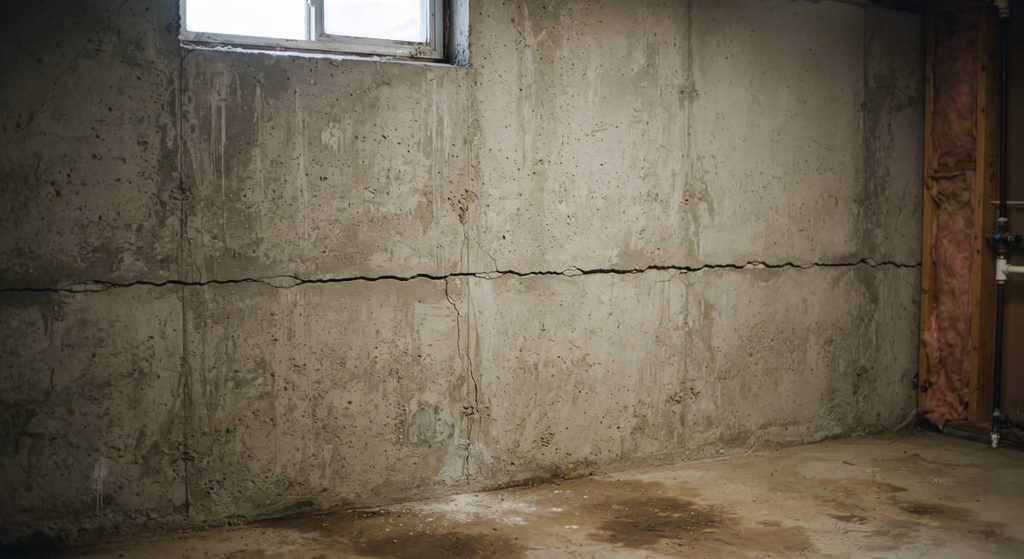
Concrete’s challenge: Much of Calgary sits on expansive clay and glacial till, soil that swells when it absorbs moisture and shrinks as it dries.. That constant expansion and contraction puts concrete under exactly the kind of stress it handles poorly, and it’s a major contributor to the foundation cracking and settling issues seen across older Calgary homes.
Screw piles’ advantage: Steel piles bypass the unstable surface layer entirely and anchor into stable soil below it. Because they’re steel rather than a rigid poured mass, they tolerate the small amounts of soil movement that would stress a concrete foundation.
Performance Against Frost Heave
Calgary’s frost line runs deep enough that any foundation element sitting above it is vulnerable to frost heave, the upward pressure caused by freezing groundwater. Concrete footings need to be poured below the frost line to avoid this, which requires deep excavation and precise timing. Screw piles are installed to depth regardless of season and are inherently placed below the frost line as part of standard design, since depth is confirmed through torque readings rather than a fixed excavation plan.
Installation Timeline and Weather Dependency
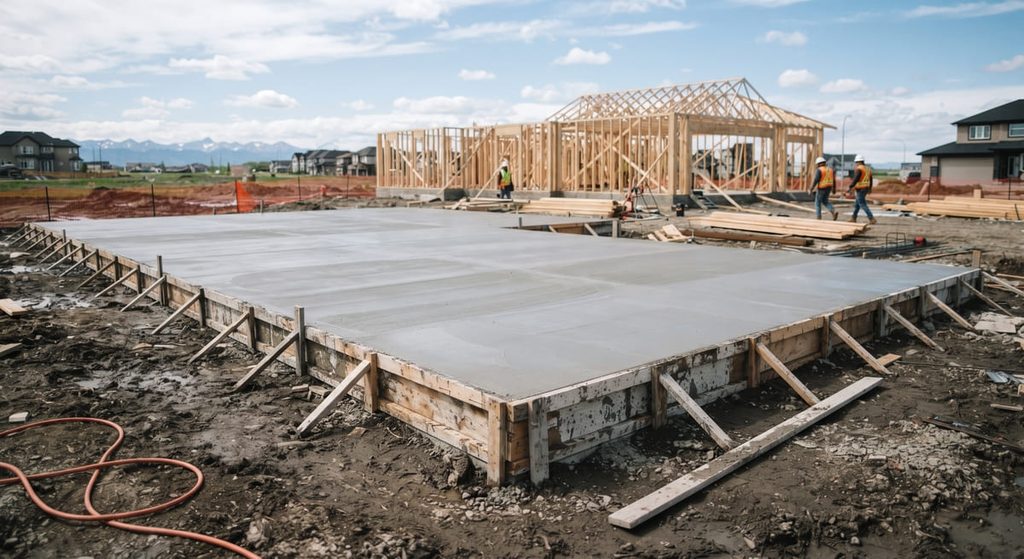
Concrete requires excavation, formwork, pouring, and curing time, and cold weather significantly complicates all four steps. Pouring concrete in Calgary’s winter requires additional insulation, heating, and protection measures, which adds cost and scheduling risk.
Screw piles can be installed in frozen ground and sub-zero temperatures without curing delays, which is one of the main reasons they’ve become common for projects that need to move forward outside the traditional summer construction window.
Cost Comparison
Upfront material and labor costs for a straightforward concrete foundation can sometimes come in lower than screw piles for very simple, small-scale projects. But that comparison shifts once you factor in:
- The cost of winter protection measures for concrete pours
- The cost of excavation versus a no-dig screw pile installation
- The long-term cost of repairs if a concrete foundation cracks or settles due to clay movement
For many Calgary projects, especially additions, garages, and anything built on clay-heavy lots, screw piles often work out to be cost-competitive or cheaper over the life of the structure once repair risk is factored in.
When Concrete Still Makes Sense
Screw piles aren’t automatically the right answer for every project. Concrete remains a solid choice for large slab-on-grade structures where a continuous poured surface is structurally or functionally necessary, projects with very stable, non-expansive soil conditions confirmed by a geotechnical report, and situations where local code or design requirements specifically call for a concrete foundation system.
The Real Deciding Factor: Your Soil and Your Structure
Neither option is universally “better.” The right choice depends on your specific soil conditions, the loads your structure will place on the foundation, your timeline, and your budget over the full lifespan of the project, not just the installation invoice. This is exactly the kind of assessment a structural engineer makes before recommending either option. Our screw pile engineering services include this comparison as part of the design process, so you’re choosing based on your site’s actual conditions rather than a general rule of thumb.
Ready to Move Forward? Let’s Make It Simple
Not sure which foundation type is right for your project? Our team can assess your site’s soil conditions and structural requirements and recommend the option that will actually perform over the long term.
FAQ
Are screw piles cheaper than concrete foundations in Calgary?
It depends on the project. Concrete can sometimes have a lower upfront cost for small, simple structures, but screw piles often become more cost-effective once winter protection, excavation, and long-term repair risk in clay soil are factored in.
Do screw piles work as well as concrete for a full house foundation?
Screw piles are commonly used for additions, garages, decks, and grade beam systems. For a full house foundation, the right choice depends on soil conditions, structural loads, and local code requirements, which is why an engineering assessment matters.
Why does Calgary’s clay soil affect concrete foundations so much?
Calgary sits on expansive clay and glacial till that swells when wet and shrinks when dry. Concrete is strong under compression but weak under tension, so this repeated soil movement puts stress on concrete in ways it isn’t well suited to handle.
Can screw piles be used to fix a failing concrete foundation?
Yes, screw piles are commonly used for underpinning, providing additional support to an existing foundation that’s settling or showing signs of movement.
Which option installs faster in Calgary?
Screw piles generally install faster since there’s no excavation, formwork, or curing time involved, and they can be installed year-round, including in winter conditions that would delay a concrete pour.