
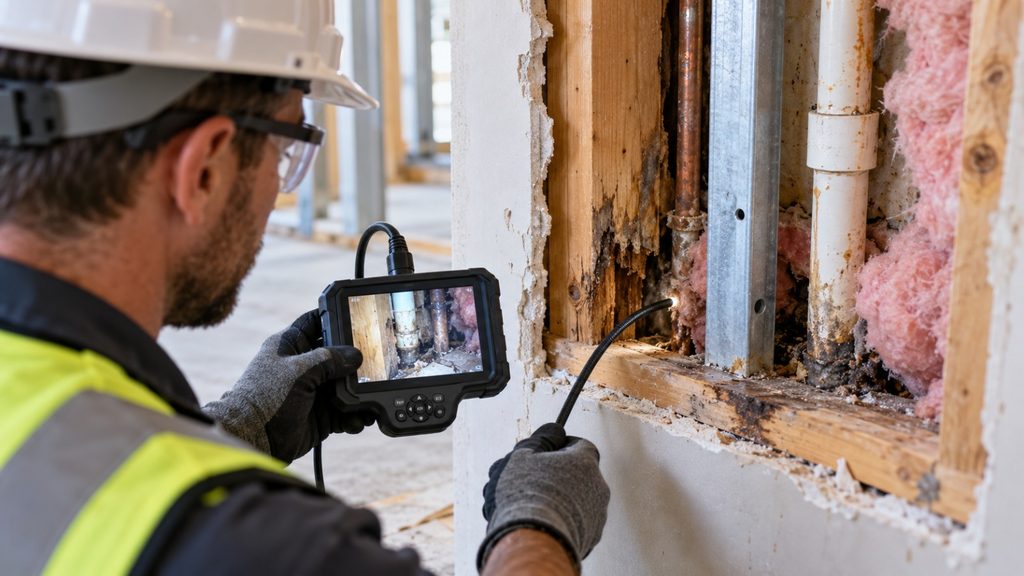
Concealed structural components can develop damage or deterioration that is not immediately visible during conventional site evaluations. Limited access to wall cavities, floor assemblies, and enclosed structural spaces can make engineering investigations more challenging.
At TAM-CRETE ENGINEERING, we provide concealed structural component and building condition engineering assessments in Calgary and surrounding Alberta communities using specialized inspection camera technology, visual examination, and professional structural engineering evaluation.
Our services support the investigation of suspected structural deficiencies, documentation of accessible concealed conditions, and development of appropriate engineering recommendations.
👉 Request an Engineering Assessment | 📞 Call +1 403-910-9488
When Do You Need a Concealed Structural Engineering Assessment in Calgary?
Our engineering services may be beneficial when a residential or commercial project involves:
- Suspected Structural Deterioration: Investigating visible indications of wood rot, deterioration, steel corrosion, or damage affecting concealed structural components.
- Structural Renovations: Evaluating accessible concealed framing and connections before proposed structural modifications.
- Post-Water-Damage Structural Concerns: Investigating potential deterioration of structural framing components following water intrusion or leaks.
- Construction Deficiencies: Examining suspected deficiencies involving concealed framing members, joists, or structural connections.
- Restricted Access Areas: Investigating structural components located within wall cavities, ceiling plenums, floor assemblies, and other enclosed spaces where suitable access is available.
- Existing Building Investigations: Supporting structural engineering assessments where original construction details or drawings are incomplete or unavailable.
Our Engineering Approach to Concealed Structural Assessment
Our structured engineering assessment process in Calgary may include:
- Site Evaluation: Visual examination of the affected building areas and identification of specific locations requiring additional internal investigation.
- Inspection Camera Investigation: Use of Milwaukee M12 M-SPECTOR 360 camera equipment to observe accessible concealed structural components through existing openings or authorized access points.
- Structural Component Documentation: Recording visible framing arrangements, structural connections, material deterioration, and other relevant internal conditions.
- Engineering Review: Evaluating documented camera observations in relation to the existing structural system and available construction drawings.
- Additional Investigation: Identifying locations requiring selective exposure, non-destructive radar scanning, material testing, or further engineering analysis.
- Engineering Recommendations: Providing practical recommendations for further investigation, targeted repairs, ongoing monitoring, or structural modifications when supported by the findings.
Common Structural Engineering Projects We Handle
- Concealed wood and steel framing investigations.
- Structural condition assessments following water-related damage.
- Investigations of suspected rot or deterioration within wall cavities.
- Existing structural framing, hanger, and connection assessments.
- Preliminary internal investigations before major structural renovations.
- Localized evaluation of inaccessible or partially concealed structural components.
- Investigation of suspected hidden construction deficiencies.
*(Need non-destructive radar mapping of embedded rebar and framing, or thermal moisture investigation? Explore our Concealed Element Mapping & Structural Assessment and our Moisture Intrusion & Building Condition Assessment).*
Why Choose TAM-CRETE ENGINEERING?
Identifying concealed conditions is only one part of a structural engineering investigation.
At TAM-CRETE ENGINEERING, we combine specialized inspection equipment with professional structural engineering expertise to interpret accessible field observations and assess their potential structural significance.
Our objective is to help property owners, contractors, and developers understand identified structural concerns, determine whether further investigation is necessary, and develop practical recommendations based on available evidence.
What Is Included in Your Concealed Structural Engineering Assessment Report?
Depending on the project scope and available site information, our engineering report may include:
- ✔️ Detailed site observations and exterior photographic documentation.
- ✔️ High-resolution inspection camera images of accessible concealed areas.
- ✔️ Technical description of observed structural components and conditions.
- ✔️ Clear identification of visible deficiencies or suspected deterioration.
- ✔️ Review of relevant structural drawings, where available.
- ✔️ Professional engineering evaluation of documented findings.
- ✔️ Recommendations for additional investigation, corrective measures, or structural repairs.
Reports requiring professional authentication are prepared and reviewed (P.Eng stamped) by an appropriately qualified licensed professional engineer in accordance with applicable professional practice requirements.
Request a Concealed Structural Engineering Assessment in Calgary
Concerned about concealed structural damage, undocumented framing, or suspected deterioration within existing building components?
Contact TAM-CRETE ENGINEERING today to discuss your project and request a professional concealed structural engineering assessment in Calgary.
Frequently Asked Questions (FAQs)
Can an inspection camera identify structural damage behind walls?
An inspection camera can document visible conditions within accessible concealed spaces, including potential wood deterioration, steel corrosion, damaged framing, and connection deficiencies. However, concealed areas outside the camera’s line-of-sight or field of view remain unassessed.
Is it necessary to remove drywall during the assessment?
Not always. Existing utility openings, fixtures, or small access points may provide sufficient access for a limited visual camera investigation. Additional openings or selective drywall removal may be required if critical structural components cannot otherwise be examined.
Can the camera determine whether a structural component is safe?
No. An inspection camera provides visual information only. Determining structural adequacy and load capacity requires appropriate engineering evaluation and may require further physical investigation, measurements, or structural calculations.
Can the assessment identify water-related structural deterioration?
The inspection camera may reveal visible signs of moisture-related deterioration (such as staining, rot, or corrosion) affecting accessible internal components. Confirming the active moisture source, full extent, or residual material strength may require additional testing.
Can TAM-CRETE ENGINEERING provide a stamped engineering report?
Where sufficient field observations, supporting information, and engineering analysis are available, an appropriately qualified professional engineer (P.Eng) can prepare and authenticate a formal report within the agreed scope.
Can this service support structural renovations?
Yes. Localized camera investigations can help document accessible concealed structural conditions—such as joist bearing or post connections—before proposed modifications. Additional investigation or formal structural design may still be required.


