
If you’ve been researching foundation options for a deck, garage, addition, or new build in Calgary, you’ve probably come across the term “screw pile” more than once. It’s become one of the most common foundation solutions in the city, and for good reason: Calgary’s soil and climate make traditional poured concrete a riskier bet than it is in most of the country. But what is a screw pile foundation actually, and how does it work? This guide breaks it down in plain language, and explains why the engineering behind it matters just as much as the installation itself.
What Is a Screw Pile Foundation?
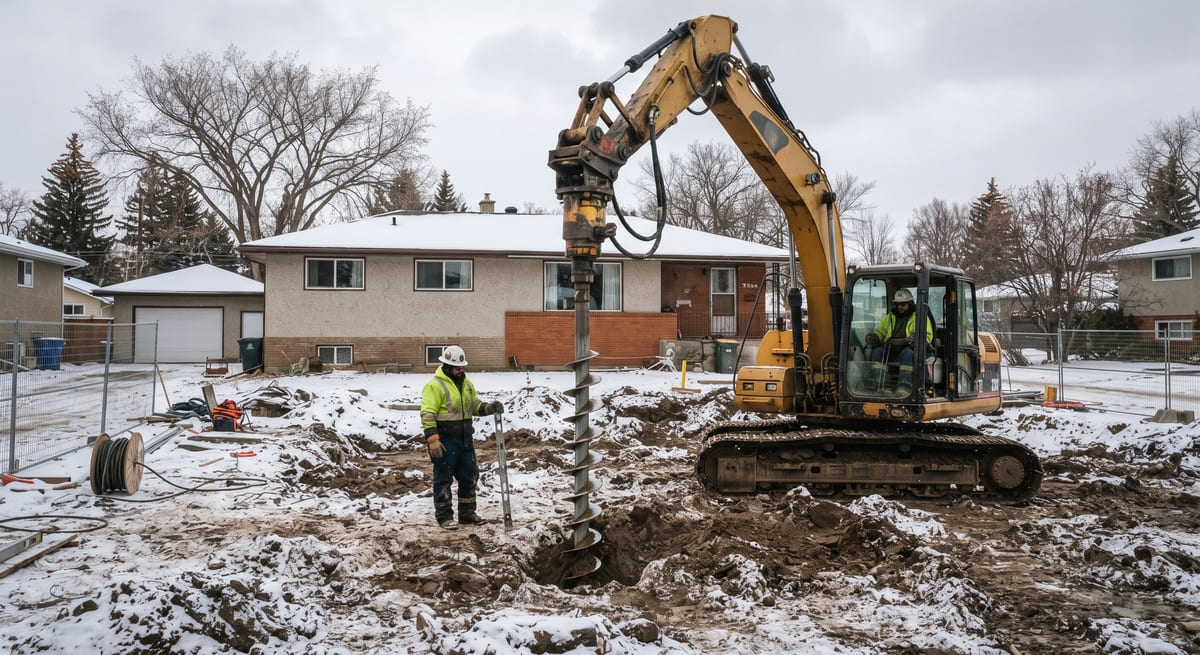
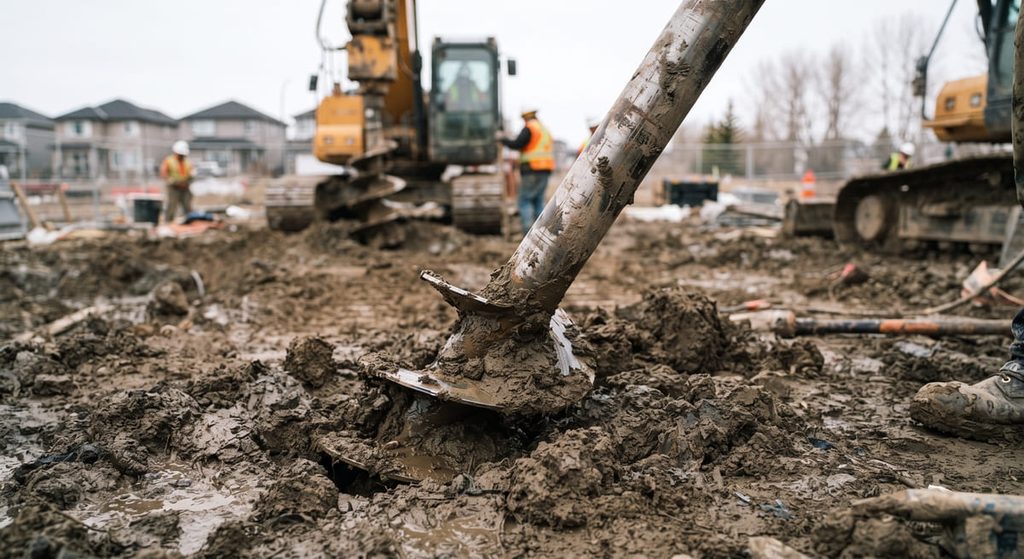
A screw pile (also called a helical pile) is a steel shaft with one or more helical plates welded onto it, shaped much like a giant screw. Instead of digging a hole and pouring concrete into it, a hydraulic torque motor drives the pile directly into the ground by rotating it, the same way a screw bites into wood. As it turns, the helical plates pull the shaft downward and anchor it into stable soil layers below the surface.
Once installed, the top of the pile is fitted with a bracket that connects to the structure above, whether that’s a deck frame, a grade beam, a garage slab, or a full building foundation.
How the Installation Process Actually Works
- Site assessment. The installer (or, ideally, an engineer beforehand) evaluates the soil conditions, load requirements, and depth needed to reach stable ground.
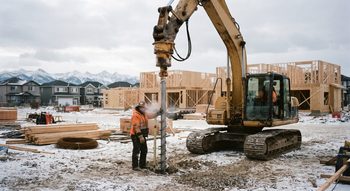
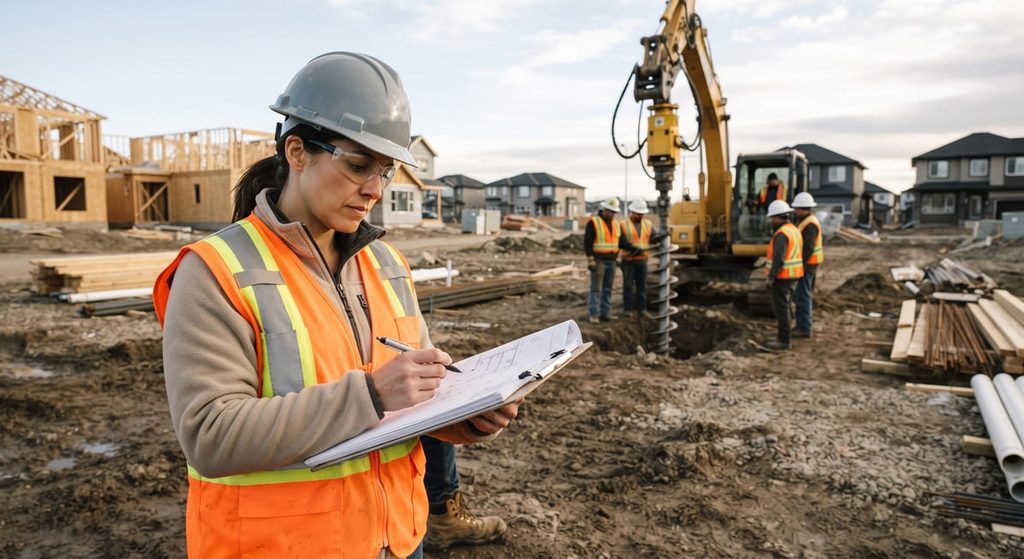
- Pile placement. The pile is positioned at the marked location using a hydraulic drive head, usually mounted on a mini excavator or skid steer for residential jobs.
- Torque-driven installation. The machine rotates the pile into the ground. As it advances, the operator monitors the torque required to turn it, and this reading is directly related to the pile’s load-bearing capacity.
- Depth and capacity verification. The pile continues until it reaches both the required depth and the torque value that confirms it has reached soil capable of supporting the design load.
- Bracket and connection. A bracket is attached to the top of the pile, ready to receive the beam, post, or foundation structure above it.
Because the process doesn’t involve excavation or curing time, most residential installations are completed in a matter of hours rather than days.
Why Screw Piles Make Sense in Calgary Specifically
This isn’t just a trend. It’s a response to Calgary’s ground conditions.
Clay-rich, expansive soil. Much of Calgary sits on glacial till and clay soils that expand when they absorb moisture and contract as they dry out. Concrete performs poorly under this kind of repeated movement because it’s strong under compression but weak under tension, and shifting soil puts it under exactly the kind of stress that causes cracking.
A deep, unpredictable frost line. Calgary’s frost line typically runs several feet below grade, and can vary depending on snow cover, drainage, and the specific site… Any foundation that doesn’t extend below that depth is vulnerable to frost heave, where freezing groundwater expands and gradually lifts the structure above it.
A short, unpredictable construction season. Screw piles can be installed in frozen ground and sub-zero temperatures, which matters in a city where the window for pouring and curing concrete outdoors is limited.
Steel piles resist both compression and lateral movement, which is exactly what’s needed in soil that shifts seasonally the way Calgary’s does.
Where Screw Piles Are Commonly Used
- Deck and porch foundations
- Garage foundations and slab support
- Home additions and extensions
- Grade beams for larger structures
- Commercial and light industrial foundations
- Underpinning for existing foundations showing settlement
Screw Piles Still Need to Be Engineered, Not Just Installed
Here’s the part that gets skipped over in a lot of general guides: installing a screw pile correctly and installing it at the right depth, spacing, and load capacity for your specific structure are two different things. Torque readings tell an installer when a pile has reached adequate resistance, but they don’t replace a structural design that accounts for the total load of your project, the spacing between piles, and how the piles interact with the rest of your foundation system.
Alberta’s building code requires that structural elements like foundations be designed to carry the loads specific to the building above them, and for anything beyond a small deck, that means a stamped engineering design is either required for permitting or strongly recommended for long-term performance. This is the step that separates a foundation that holds up for decades from one that looks fine on installation day but underperforms once real seasonal movement sets in.
How Tam-Crete Engineering Fits In
Our team designs the engineering side of screw pile foundations for Calgary homeowners and builders, confirming pile depth, spacing, and load capacity based on your specific soil and structure, and providing the stamped drawings needed for permitting. If you’re planning a project that involves screw piles, our screw pile engineering services cover exactly this step, before the installer ever shows up on site.
Ready to Move Forward? Let’s Make It Simple
If you’re planning a project that needs a screw pile foundation, get the engineering right before the installer arrives. Our team will assess your site and provide stamped, permit-ready drawings for your specific structure.
FAQ
How deep do screw piles need to go in Calgary?
Depth depends on soil conditions and load requirements, but piles generally need to reach well below Calgary’s frost line and into stable, undisturbed soil. The exact depth is confirmed during installation through torque readings, not assumed in advance.
Are screw piles better than concrete foundations in Calgary?
For many residential applications, yes. Screw piles handle Calgary’s clay soil and frost cycles better than poured concrete, and they don’t require curing time. That said, the right foundation type depends on your specific project, soil report, and structural loads.
Can screw piles be installed in winter?
Yes. Screw piles can be installed in frozen ground and sub-zero temperatures, which is one of the main reasons they’re popular in Calgary’s short construction season.
Do I need an engineer for a screw pile foundation?
For decks and very small structures, some jurisdictions allow standard installation without a stamped design. For additions, garages, and larger structures, Alberta’s building code generally requires an engineered design for permitting, and it’s the only way to confirm the piles are sized and spaced correctly for your specific loads.
How long do screw pile foundations last?
Properly designed and installed steel screw piles are built for long-term structural use and are not prone to the cracking or heaving that affects concrete foundations in expansive soil, provided they were installed to the depth and capacity the engineering design specifies.