Screw pile depth requirements are one of the most Calgary-specific parts of any foundation project, because how deep a pile needs to go depends directly on how deep this city’s frost line reaches, and how far below that your soil stays stable. This guide focuses specifically on Calgary, not Alberta generally, since frost depth and soil conditions vary significantly from one region of the province to another.
For the fundamentals of how screw piles work and why they need an engineered design in the first place, see our earlier guides on how screw pile foundations work and screw pile engineering design.
Calgary’s Frost Line, Specifically
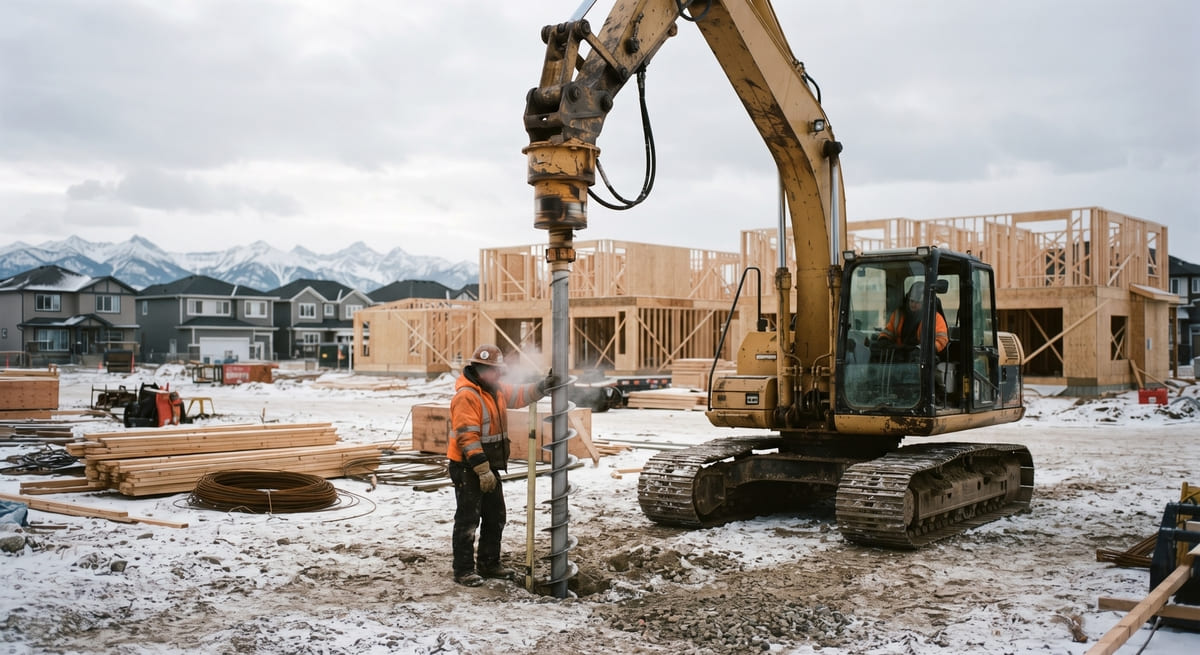
Calgary sits in one of the deeper frost zones in southern Canada. The frost depth commonly used as the baseline for residential foundation planning in Calgary is approximately 4 feet (1.2 metres) below grade, and the Alberta Building Code requires footings and foundation elements to extend below this depth to avoid frost heave. Calgary’s frequent chinook winds add another layer of complexity, since rapid freeze-thaw swings can move moisture in the soil more aggressively than in regions with a steadier winter climate.
This is the baseline depth that any screw pile foundation in Calgary needs to clear, but it’s a starting point, not the final answer.
Why 4 Feet Is a Baseline, Not a Fixed Number
Unlike a fixed excavation depth for a concrete footing, screw pile depth isn’t set purely by a code minimum. Piles are driven until they reach both an adequate depth below the frost line and a torque reading that confirms they’ve reached soil capable of supporting the design load. In practice, this means:
Soil variability across the site. Even within a single Calgary lot, soil density and composition can change. A pile in one corner of a foundation may need to go deeper than a pile a few metres away to reach the same bearing capacity.
Load requirements specific to the structure. A pile supporting a small deck has different depth and capacity needs than a pile supporting a garage or an addition tied into the main structure.
Groundwater and drainage conditions. Poor drainage around a site can affect how deep frost penetrates and how the soil behaves seasonally, which an engineer accounts for in the design.
How Depth Is Verified During Installation
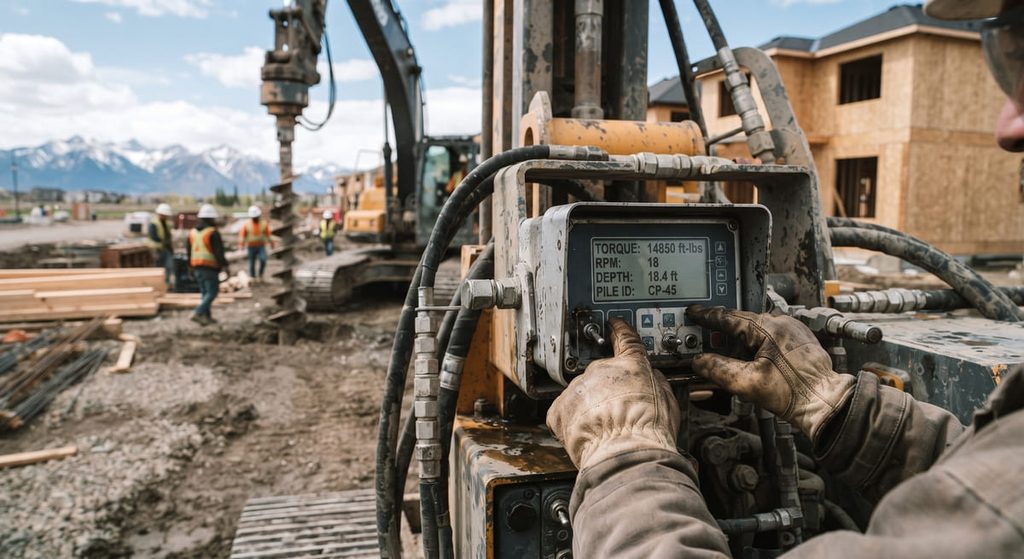
Screw pile depth isn’t just specified on paper and assumed correct. During installation, the crew monitors torque resistance as the pile advances. Torque is directly related to the soil’s bearing capacity, so a pile that reaches the design depth but doesn’t hit the required torque value hasn’t actually reached adequate bearing soil, and needs to continue further. This is one of the practical advantages screw piles have over a fixed-depth concrete footing: depth is confirmed in real time against actual site conditions, not just a plan drawing.
What an Engineered Design Specifies for Depth
A stamped screw pile design doesn’t just say “go below the frost line.” It specifies the minimum depth for each pile location based on the load it needs to carry, the torque value that confirms adequate capacity has been reached, and instructions for what to do if a pile reaches design depth without hitting that torque value, since that scenario does happen on real sites. This is the difference between a design produced for your specific project and a generic assumption applied across every job regardless of soil conditions.
Common Depth-Related Problems We See in Calgary
- Piles driven to a fixed depth without confirming torque, resulting in under-capacity foundations
- Designs that don’t account for known poor soil conditions on a specific lot
- Shallow installations on small structures like decks that still fall within frost heave range
- Inconsistent depth across a single foundation system due to varying soil conditions not being addressed in the design
Each of these is preventable with a proper site-specific engineering design rather than a standard depth assumption.
How Tam-Crete Engineering Fits In
We calculate the depth and torque requirements specific to your site and structure, factoring in Calgary’s frost line, your soil conditions where data is available, and the actual loads your project will place on the foundation. Our screw pile engineering services produce the stamped design your installer follows to verify each pile individually, rather than relying on a single blanket depth for the whole project.
Ready to Move Forward? Let’s Make It Simple
Get a depth and load design specific to your site, not a generic assumption about Calgary’s frost line. Our team will calculate exactly what your screw piles need to reach.
FAQ
How deep do screw piles need to go in Calgary?
The baseline is approximately 4 feet (1.2 metres) below grade to clear Calgary’s frost line, but the actual required depth for each pile depends on soil conditions and load requirements, and is confirmed during installation through torque monitoring.
Does every screw pile on a project need to be the same depth?
Not necessarily. Soil conditions can vary across a single site, so individual piles may need to go deeper than others to reach the same bearing capacity, even within the same project.
What happens if a screw pile doesn’t reach the required torque at the design depth?
The pile needs to continue further until it reaches adequate bearing capacity. A proper engineering design anticipates this possibility and specifies what to do if it happens on site.
Is 4 feet enough for a screw pile foundation in Calgary?
Four feet is the general frost line baseline, but the actual required depth depends on your specific structure’s loads and your site’s soil conditions, which is why a site-specific engineering design matters more than a fixed number.
Can shallow screw piles be used for small structures like decks?
Decks still need to clear the frost line to avoid heaving, even though the loads involved are smaller than a full structure. Depth requirements should still be confirmed for the specific project rather than assumed.