Your home’s foundation is doing its job silently, every single day — bearing the weight of the entire structure above it, resisting soil pressure from all sides, and accommodating the freeze-thaw cycle that Calgary’s climate delivers year after year. When it starts to have problems, it rarely announces itself with a dramatic collapse. Instead, it sends signals — subtle at first, then harder to ignore.
The challenge is that most of the early signs of foundation problems in Calgary homes don’t look like foundation problems at all. They look like a door that needs adjusting, a floor that feels slightly off, or a crack in the drywall that you assume is from settling. By the time the cause is obvious, the damage is often significant.
This guide walks you through the most common signs that your Calgary home may have foundation problems, what’s causing them, and when those signs mean it’s time to contact a structural engineer rather than a handyman.
Why Calgary Homes Are at Higher Risk for Foundation Problems
Foundation problems don’t happen randomly. In Calgary, several factors work together to put residential foundations under more stress than in many other Canadian cities.
Expansive clay soils are the primary culprit. Much of Calgary — particularly established neighbourhoods like Brentwood, Charleswood, Varsity, Ranchlands, and the older inner-city communities — sits on glacial lake clay deposits that expand significantly when wet and shrink when dry. Every rain season and every drought cycle moves the soil. Your foundation moves with it.
Freeze-thaw cycles compound the problem. Calgary experiences dramatic temperature swings — sometimes 30°C or more within a single week. Moisture in the soil around your foundation freezes, expands, and pushes against the foundation walls and footing. When it thaws, the soil contracts. Over years and decades, this repeated movement causes cumulative stress.
Drainage problems accelerate foundation deterioration. Homes where surface water drains toward the foundation rather than away from it, where downspouts discharge close to the house, or where window wells collect water are at significantly higher risk of foundation movement, hydrostatic pressure buildup, and eventual structural compromise.
Understanding the cause matters because different causes produce different warning signs -and some signs are far more urgent than others.
1. Doors and Windows That Suddenly Stick or Won’t Close Properly
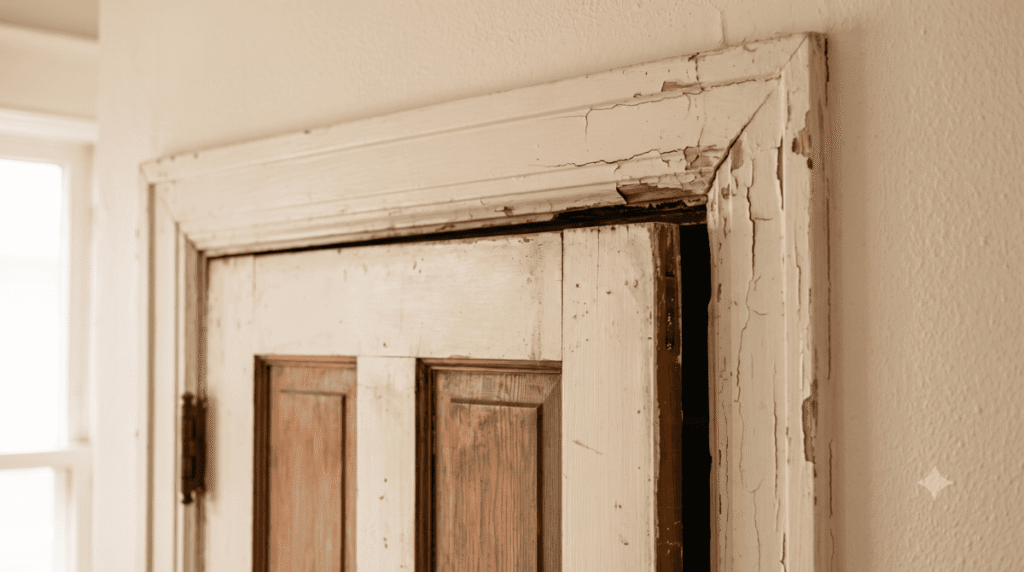
This is one of the earliest and most commonly dismissed signs of foundation movement. When a foundation settles unevenly, the structural frame of the house distorts — and doors and windows are among the first places where that distortion becomes visible.
What to look for:
- Interior or exterior doors that suddenly require force to open or close, when they previously operated smoothly
- Doors that won’t latch without lifting the handle
- Gaps appearing at the top corner of a door frame — diagonal gaps are particularly significant
- Double doors or French doors that no longer meet evenly in the middle
- Windows that are difficult to open, or that won’t stay open on their own
Why it happens: When a foundation settles in one area more than another — called differential settlement — the structural frame above it racks slightly out of square. Door and window openings, which are designed to be perfectly rectangular, become slightly parallelogram-shaped. The door or window, still rectangular, no longer fits cleanly.
When to be concerned: A door that’s always been slightly stiff in humid summer months is a different story from a door that was perfectly fine last year and now won’t close. Sudden changes are the signal. If multiple doors or windows throughout the house are all developing issues at the same time, that is a strong indicator of active foundation movement.
2. Cracks in Interior Walls and Ceilings
Cracks in drywall or plaster are extremely common and don’t always indicate foundation problems. The question is what type of crack, where it is, and what direction it runs.
Cracks that are typically cosmetic:
- Hairline cracks in drywall at corners of door and window openings — these often result from normal seasonal movement and drywall nail pops
- Horizontal cracks at ceiling-to-wall joints in older homes — usually paint and tape adhesion failure
- Fine random cracking across a large drywall panel — normal shrinkage
Cracks that warrant investigation:
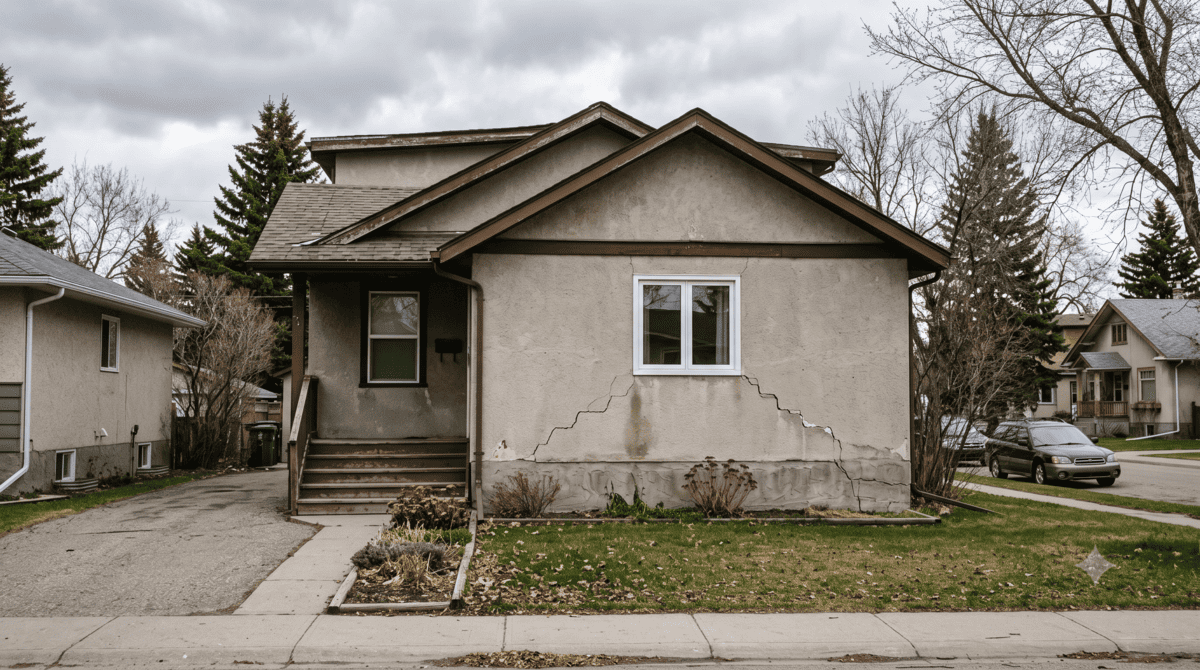
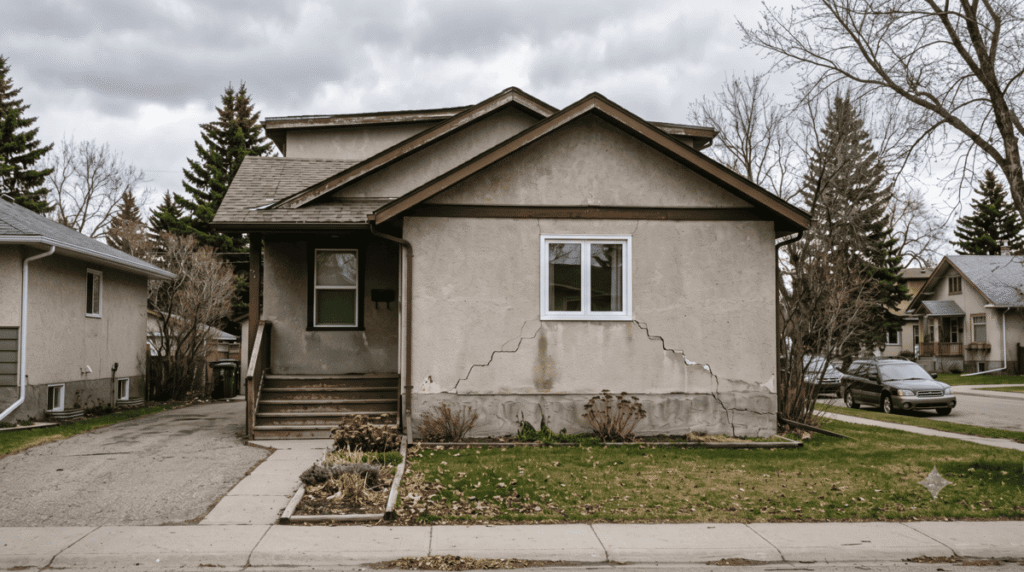
- Diagonal cracks running from the corners of door or window openings — these are the most classic above-grade sign of differential foundation settlement. The crack runs in the direction the frame is being pulled.
- Stair-step cracks in brick or block exterior veneer — following the mortar joints diagonally, these indicate the brick veneer (and the structure behind it) is settling
- Cracks that run from floor to ceiling — particularly if they’re wider at one end than the other
- Cracks that reappear after being patched — a crack that comes back after repair is a moving crack, and moving cracks indicate ongoing foundation movement
- Cracks accompanied by displacement — where one side of the crack sits higher or further out than the other
3.Sloping, Bouncy, or Uneven Floors
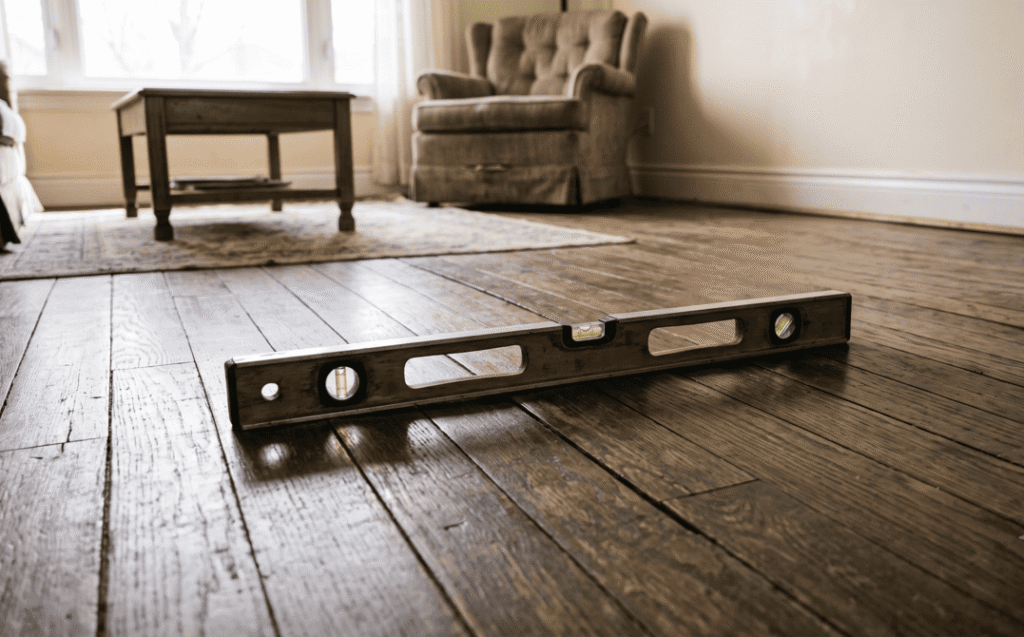
Floors that aren’t level are one of the most telling signs of foundation problems — but they’re also one of the most overlooked, because they develop gradually and homeowners simply adjust to them.
What to look for:
- Placing a marble or small ball on the floor and watching it roll consistently in one direction
- Furniture that wobbles on a previously stable floor
- Noticeable slope when walking across a room — a feeling that you’re walking uphill or downhill
- Gaps appearing between the baseboard and the floor, or between the floor and the wall
- Creaking or bouncing in floors that were previously solid
What causes it: Sloping floors above the basement or crawlspace are usually caused by one of three things: the foundation under one section has settled more than another; the posts or columns supporting the main floor beam have shifted or deteriorated; or the main floor beam itself has deflected. All three root causes relate back to foundation or structural support conditions.
In Calgary homes with crawlspaces — more common in older bungalows — the crawlspace posts are particularly vulnerable to moisture damage and frost heaving. In homes with full basements, floor slope usually indicates either differential foundation settlement or a failing support column.
When to be concerned: A slope of more than 1 inch over 10 feet (roughly 1%) is generally considered significant in residential construction. If you’re noticing the slope without measuring it, it’s likely already past that threshold. Get it assessed.
4.Gaps Between Walls and the Ceiling or Floor
As the structure distorts due to foundation movement, the connections between building components begin to open up. These gaps are structural distortion made visible.
What to look for:
- A visible gap between an interior wall and the ceiling, particularly if the gap is wider at one end than the other
- Gaps between the baseboard and the floor, especially if they appear suddenly or in multiple rooms
- Exterior brick or stone veneer separating from the wall around windows or at the roofline
- The chimney pulling away from the main body of the house — a gap between the chimney and the adjacent wall
Why the chimney matters: Chimney separation is one of the most visually obvious signs of foundation settlement and one that Calgary homeowners frequently dismiss as “just the chimney.” Chimneys have their own independent footing. When the main foundation settles differently from the chimney footing, the two separate. A gap of more than a centimetre between the chimney and the house wall is a significant structural signal.
5. Exterior Signs — What to Look for Outside Your Home
Foundation problems don’t just show up inside. The exterior of your Calgary home can tell you a great deal about what’s happening below grade.
Stair-step cracking in brick veneer: As described above, diagonal cracking through mortar joints in brick or block is a classic settlement indicator. Pay particular attention to cracks near corners and below window openings.
Walls that are visibly out of plumb: Stand at the corner of your home and look along the wall surface. A wall that leans or bows outward — even slightly — is showing structural distortion. In Calgary’s clay soil environment, outward wall lean can indicate that the footing is rotating due to expansive soil pressure.
Gaps around window and door frames in the exterior wall: Separation between the frame and the surrounding wall material, or cracked caulk that opens every year despite resealing, indicates ongoing movement.
Ground that slopes toward the house: This is both a cause and a symptom. If the ground around your foundation grades toward the house rather than away from it, water is being directed to the foundation continuously. Over years, this saturates the soil, increases hydrostatic pressure, and accelerates foundation deterioration. Check that the ground drops at least 6 inches over the first 10 feet away from your foundation on all sides.
Sunken or raised sections of concrete flatwork: If your driveway apron, patio, or walkway adjacent to the house has sections that have settled, heaved, or separated, the soil immediately around your foundation is moving — and that movement doesn’t stop at the edge of the concrete.
6. Water in the Basement — More Than a Moisture Problem
Water intrusion in a Calgary basement is extremely common and not always a structural problem. But in some circumstances, it’s directly related to foundation failure.
Cosmetic moisture vs. structural concern:
Water that appears on the floor after heavy rain, or that seeps through the wall at the floor-wall joint, is typically a drainage and waterproofing issue. Serious, but not structural.
Water that enters through cracks in the foundation wall — particularly cracks that have appeared recently or are growing — is a different matter. The crack is the structural event; the water is just following the path it created.
Water that appears along a horizontal crack in a concrete block wall, or behind a wall that is visibly bowing inward, is definitively a structural emergency. The water is not causing the structural failure — the structural failure is what allowed the water in.
If you’re seeing water intrusion through cracks rather than through the floor-wall joint or window wells, the investigation needs to start with the crack — not with waterproofing.
7. The Stress Test: Multiple Signs at Once
Any single sign from the above list could have an innocent explanation. Sticking doors happen. Drywall cracks from humidity. Floors develop minor unevenness from lumber shrinkage.
What changes the picture is when multiple signs appear together, or when signs that were previously minor begin to worsen.
High-concern combinations in Calgary homes:
- Sticking doors + diagonal wall cracks + sloping floors → classic differential settlement pattern
- Horizontal basement crack + bowing wall + water intrusion → structural wall failure in progress
- Chimney separation + exterior stair-step cracking + interior ceiling cracks on the same side → settlement concentrated on one side of the house
- New cracks appearing + existing cracks getting wider + gaps opening → active ongoing movement, not historical settlement that has stabilized
When you’re seeing two or more of these signs together, the right move is a professional structural assessment — not patching and hoping.
When to Call a Structural Engineer vs. a Home Inspector
This is a question many Calgary homeowners get wrong, and it matters.
A home inspector provides a general assessment of the overall condition of a home — a broad overview of all systems, including foundation, roofing, plumbing, electrical, and HVAC. They are trained to identify visible signs of potential concern and flag them for further investigation. They are not licensed to design structural repairs, produce stamped reports for permit purposes, or determine the structural capacity of any element.
A structural engineer is a licensed professional (P.Eng registered with APEGA) who evaluates the structural integrity of specific elements — in this case, the foundation system — and produces a professional engineering assessment with legal standing. A structural engineer can tell you not just that something is wrong, but what caused it, how serious it is, what the repair options are, and what the risk of inaction looks like.
Call a structural engineer when:
- A home inspector has flagged foundation concerns and recommended further evaluation
- You’re buying a home and want certainty about foundation condition before closing
- You’ve noticed multiple signs of foundation movement appearing or worsening
- You need a structural inspection letter for real estate, insurance, or permit purposes
- You’re planning a basement renovation, load bearing wall removal, or home addition and want to confirm the foundation can support the new loads
- You’ve had foundation repair done and want an independent engineering verification
What a Structural Foundation Assessment at Tam-Crete Involves
When Tam-Crete Engineering carries out a foundation assessment for a Calgary homeowner, the process covers both the visible signs and the structural context behind them.
Visual inspection of all accessible areas — foundation walls, floor slab, columns, beams, and the above-grade structure where signs of distress have appeared.
Plumb and level checks — confirming whether walls are out of plumb, floors are out of level, and by how much.
Crack documentation — location, direction, width, and evidence of movement history for every crack in scope.
Structural context — reviewing how the foundation condition connects to the loads being placed on it, including any recent or planned renovations.
Engineering report or stamped inspection letter — depending on your purpose, we produce either a formal engineering report with findings, cause assessment, and repair recommendations, or a structural inspection letter for real estate or insurance use.
Our licensed P.Eng engineer serves homeowners throughout Calgary, Airdrie, Cochrane, Okotoks, Lethbridge, Red Deer, Edmonton, and across Alberta.
Don’t Wait for the Problem to Get Obvious
Foundation problems in Calgary rarely fix themselves. Expansive clay soils don’t stop moving. Freeze-thaw cycles come back every year. A crack that was 2 mm wide this spring will be wider next spring if the underlying condition isn’t addressed.
The homeowners who face the most expensive foundation repairs are almost never the ones who acted too early. They’re the ones who noticed the signs, assumed it was nothing, and discovered two or three years later that “nothing” had become a significant structural failure.
An engineering assessment early in the process — when the signs are subtle — gives you information, options, and time. Waiting until the signs are impossible to ignore often means fewer repair options and higher costs.
If you’re seeing any of the signs described in this guide, the next step is a professional evaluation from a licensed structural engineer. Not a contractor. Not a waterproofing company. A structural engineer — because they’re the only professional qualified to tell you what’s actually happening and what actually needs to be done.
Ready to Move Forward? Let’s Make It Simple.
If you’ve noticed any of these warning signs in your Calgary home — or you want peace of mind before buying, selling, or renovating — Tam-Crete Engineering is ready to help.
Our licensed P.Eng team provides foundation assessments, structural inspection letters, and engineering consultations for homeowners and contractors throughout Calgary and Alberta.
📞 Call us now on: (403) 910-9488 📧 Email us: info@tamcrete-eng.com
Frequently Asked Questions
What are the most common signs of foundation problems in Calgary homes?
The most common signs include doors and windows that suddenly stick or won’t close properly, diagonal cracks running from the corners of door or window openings, sloping or uneven floors, gaps appearing between walls and ceilings, exterior stair-step cracking in brick veneer, and chimney separation from the main wall. In Calgary specifically, these signs are often caused by expansive clay soils and freeze-thaw movement. If you’re seeing multiple signs at once, a structural engineering assessment is recommended.
Are all cracks in my Calgary home walls a sign of foundation problems?
No — most interior wall cracks are cosmetic and result from normal seasonal movement, drywall shrinkage, or humidity changes. The cracks that indicate potential foundation problems are diagonal cracks radiating from door or window corners, cracks that reappear after being patched, cracks wider than 3 mm, and cracks accompanied by visible displacement where one side sits higher than the other. When in doubt, have a structural engineer evaluate — not a painter or a handyman.
How much does a foundation inspection cost in Calgary?
The cost of a structural engineering foundation assessment in Calgary depends on the size of the home and the scope of inspection required. Contact Tam-Crete Engineering at (403) 910-9488 for a project-specific quote. What’s certain is that a professional assessment costs a small fraction of what delayed action on a serious foundation problem will cost in repair bills.
Can I sell my Calgary home if it has foundation problems?
Yes — but you are legally required to disclose known material defects to buyers in Alberta, and foundation problems are a material defect. Many buyers will request a structural inspection letter before completing a purchase, and some mortgage lenders will require one if foundation concerns are identified during a standard home inspection. A stamped engineering report from Tam-Crete Engineering gives both buyers and sellers confidence and legal clarity about the property’s structural condition.
How urgently do I need to act if I notice foundation problem signs in my Calgary home?
It depends on what you’re seeing. A single diagonal crack in drywall that appeared years ago and hasn’t changed can be monitored. Multiple new signs appearing together, any horizontal crack in a basement wall, a wall that is visibly bowing, or signs that are actively worsening are situations where you should contact a structural engineer within days — not months. Foundation problems in Calgary’s clay soil environment do not stabilize on their own; they typically worsen with each seasonal cycle.